PetroEquity analysis

Articles

Clear-eyed analysis of the strategic decisions that create—or destroy—shareholder value across the oil and gas sector.

32 analyses in the archive

01

Energean: The Rock Still Gets a Vote

Energean turned discovered East Med gas into a financeable public-market success. The harder question now is whether the same commercial skill can support a broader E&P company when debt, dividends, reservoir risk and geopolitics all matter.

Read article
02

The New Cost of Capital in Oil & Gas

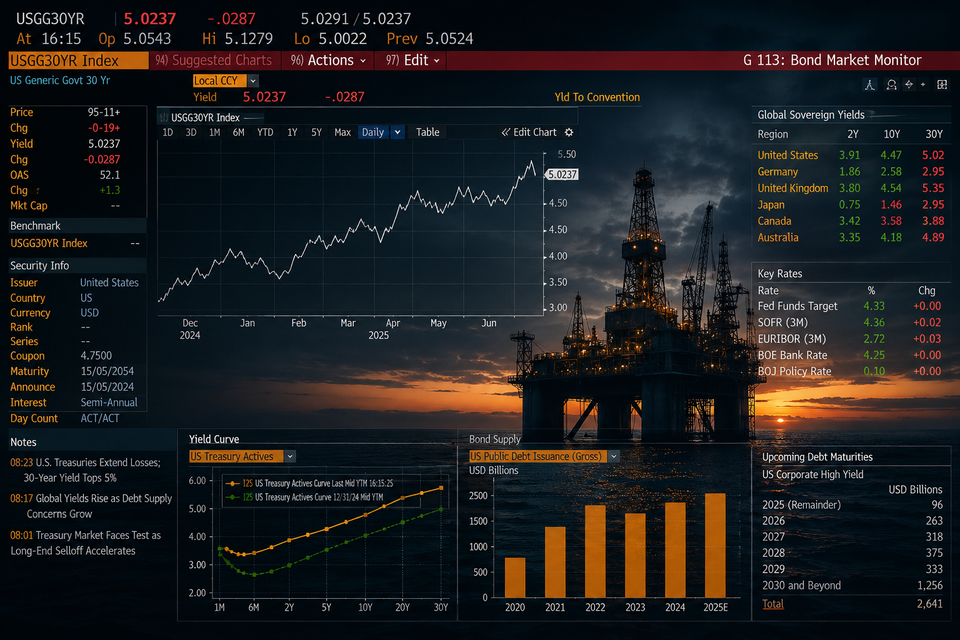
The US Treasury’s rather fruitless attempt last week to take up some of the slack in demand for long-dated government bonds followed a sharp move in a market that normally sits quietly beneath almost every other cost of capital. Gross US federal debt recently passed $40 trillion. The broader OECD sovereign picture is not especially comforting either, with many governments carrying much larger debt burdens than before the financial crisis. It would be an exaggeration to describe the present situ

Read article
03

Talos Energy: What Makes a Good E&P CEO?

Talos Energy’s move from founder Tim Duncan to former Shell executive Paul Goodfellow raises a wider question: what really prepares someone to lead a small or mid-cap E&P, where individual judgement on assets, capital and M&A can shape the whole company?

Read article
05

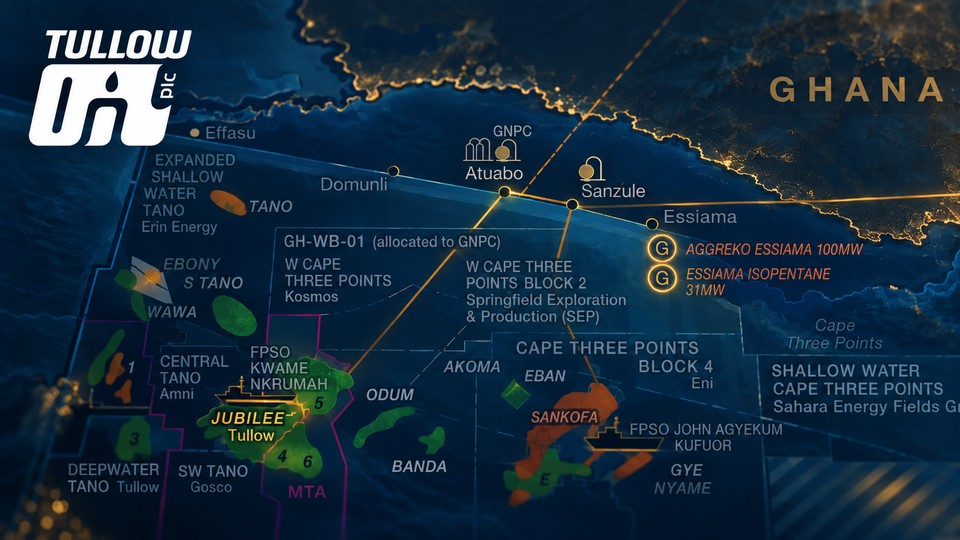
Kosmos Energy: From Discovery to Disappointment

Kosmos Energy found Jubilee, opened a major gas province offshore Mauritania and Senegal, and built a much larger E&P. Shareholders were left with something very different. This is the story of how exploration success failed to become shareholder value.

Read article
07

Murphy Oil: What Happened to a Great Little Oil Company?

Murphy Oil was once an unusually complete and technically ambitious oil company for its size. Over the past decade, much of that business has been sold, separated or reshaped. This article looks at what Murphy built, what changed, and why the shareholder outcome has been far less impressive.

Read article
11

Shell’s Trading Machine

Shell wants investors to place greater value on its trading and supply business, but outsiders still cannot see clearly how much it earns, how risks are controlled or how durable its advantage really is.

Read article
12

ConocoPhillips got bigger, but did it get better?

Before I began researching this article, I assumed ConocoPhillips was a relatively simple corporate story. It had spun off Phillips 66, disposed of much of its international inheritance and concentrated on unconventional oil and gas in the Lower 48. Successive purchases of Concho Resources, Shell’s Permian assets and Marathon Oil then turned it into a larger version of the post-separation business. That captures the rough direction of travel, but it is an inadequate description of what ConocoPh

Read article
13

How Oxy Monetised California Without a Buyer

Occidental Petroleum's 2014 spin-off of California Resources Corporation was more than a corporate separation. It was a high-stakes capital allocation decision that unlocked value for some shareholders, transferred risk to others and exposed the dangers of leverage in a cyclical industry.

Read article

15

Thirty-Three Days at BP

Albert Manifold was hired to help remake BP and removed just thirty-three days after shareholders confirmed him as chairman. His fall exposed a deeper struggle over the company’s strategy, board and future direction.

Read article

16

Chevron’s Different Bet

🎧 Prefer to listen? Chevrons different bet0:00/2309.549661× We previously examined how Shell changed after acquiring BG Group in 2016. The deal deepened Shell’s exposure to natural gas, LNG and the increasingly complex markets through which gas molecules are produced, traded, transported and sold. Over the following decade, Shell’s commercial reach expanded while its production, proved reserves and reserve life declined. The question was not whether Shell had generated shareholder returns, be

Read article
17

Shell’s Big Bet: Can a Focus on Gas, Not Oil, Work?

The oil majors have spent the past decade responding to one major disruption after another. The collapse in oil prices in late 2014 forced deep spending cuts and portfolio repair. Then the energy transition pushed management teams to decide how quickly the industry would change, what that meant for oil and gas demand, and how much of their existing businesses should change with it. The roller-coaster continued as the pandemic brought an extraordinary collapse in demand, followed almost immediate

Read article
18

The Oil Majors: Strong EPS, Strong Returns — but Is the Business Getting Stronger?

Two oil majors reporting similar earnings per share, dividend yields and apparently respectable shareholder returns may look the same, but their overall performance can still be fundamentally different. One may be growing in value, and therefore increasing its future earning capacity, while still paying shareholders returns that are competitive with its peers. Another may be doing the opposite: appearing to compete by generating enough cash to support dividends and buybacks, but with little evi

Read article
19

Exxon, Shell and the Price of Strategic Freedom

The Financial Times recently published a substantial profile piece of ExxonMobil and its chief executive, Darren Woods, under the title The King of Big Oil. The title suggests a conventional story about operational success, scale and corporate recovery. Those elements are there to begin with, but the article then becomes about power: who sets the strategy, how much freedom management should have to pursue it, and how far a company can go to insulate itself from activist shareholders pressing oil

Read article

20

How Palliser Reshaped Capricorn: From Cash Discount and Boardroom Battle to a Takeover Premium

Genel Energy has announced a recommended cash offer for Capricorn Energy, valuing the company at approximately $360 million on a fully diluted basis. Shareholders have been offered $4.74 per share, comprising $3.75 in cash from Genel and a $0.99 special dividend from Capricorn. The total package is worth 357p per share, a 34% premium to Capricorn’s closing share price on 10 March 2026, the day before the start of the offer period. If the Genel offer completes, it will mark the final act in Pall

Read article

21

How Eni Kept its Oil and Gas Strategy While Placing Transition Bets That Are Paying Off

I have written a lot recently about what oil companies got wrong: the retreat from exploration, the confusion of transition strategy with corporate identity, and the tendency of boards to mistake a fashionable market narrative for durable industrial reality. This article is about the other side of that argument. Eni is interesting because it did not choose between being an oil and gas company and having a transition strategy. It did not pursue transition businesses in a way that deprived the up

Read article

22

What Stabroek Taught the Market About Exploration

I left the upstream oil and gas industry and joined my first investment bank in February 2014. After more than 20 years in the industry, I knew the sector from the inside, but the first few months in banking were still a different kind of education: learning how companies, strategies, talking points and investor concerns looked from the capital-markets side. Then the oil price collapsed, and the sector I thought I was starting to understand from that perspective turned inside out. Client convers

Read article
24

Control Is Becoming the Strategic Premium in Gas

Gunvor has backed Western Natural Resources, an Oklahoma City-based private oil and gas producer, as it builds a portfolio of US natural gas assets. Reuters reported that Gunvor provided capital to support Western’s roughly $300 million acquisition of gas-producing assets in the Haynesville shale, one of the key US basins connected to LNG export infrastructure. Gunvor is not a conventional E&P company looking to add production for its own sake. It is a commodity trader, and traders tend to move

Read article

25

The Globalisation of Gas

On 12 October 1964, a ship called Methane Princess sailed up the Thames Estuary and berthed at Canvey Island, a low-lying stretch of reclaimed marshland better known for sea walls and mudflats than making energy history. She had sailed from Arzew, Algeria, with a cargo of liquefied natural gas. It was the first commercial LNG cargo ever delivered anywhere in the world. The voyage took six days, but its significance would take sixty years to become clearer. By cooling gas into liquid form, prod

Read article

26

ExxonMobil and the Discipline of Doing Nothing

Reports that ExxonMobil is evaluating acquisitions are not really about any single target. Woodside Energy is one name in the headlines today, but the bigger question is Exxon itself. After Pioneer, Exxon has been rewarded for discipline and visible growth from the Permian and Guyana. Its 2030 plan leans heavily on those two growth engines, alongside LNG. If Exxon is looking again, the issue is not whether it can afford to act. It can. The issue is whether another material acquisition would make


Read article
27

BP, Shell and Why the Right Barrels Matter

BP is reportedly marketing minority interests in two of its most important future Gulf of Mexico developments, in what appears to be a farm-down with BP retaining operatorship. The assets are substantial and both are prestige pieces within the BP portfolio. Kaskida, targeting first oil in 2029, is BP’s sixth operated hub in the US Gulf of Mexico, with a planned floating production platform capable of producing 80kbopd from six wells in its first phase. Tiber is BP’s seventh operated hub, also de

Read article
28

AIM oil and gas has lost its way. Can it be rebuilt?

There was a time when AIM was one of the natural homes for junior oil and gas companies. It was a market where exploration stories could get funded, overlooked acreage could find an audience, and small companies with big ambitions could raise meaningful money. In the years before the financial crisis, AIM was vibrant. It had liquidity, retail enthusiasm, specialist brokers, active institutions, and a willingness to back high-risk natural resources stories. For oil and gas companies, particular

Read article
29

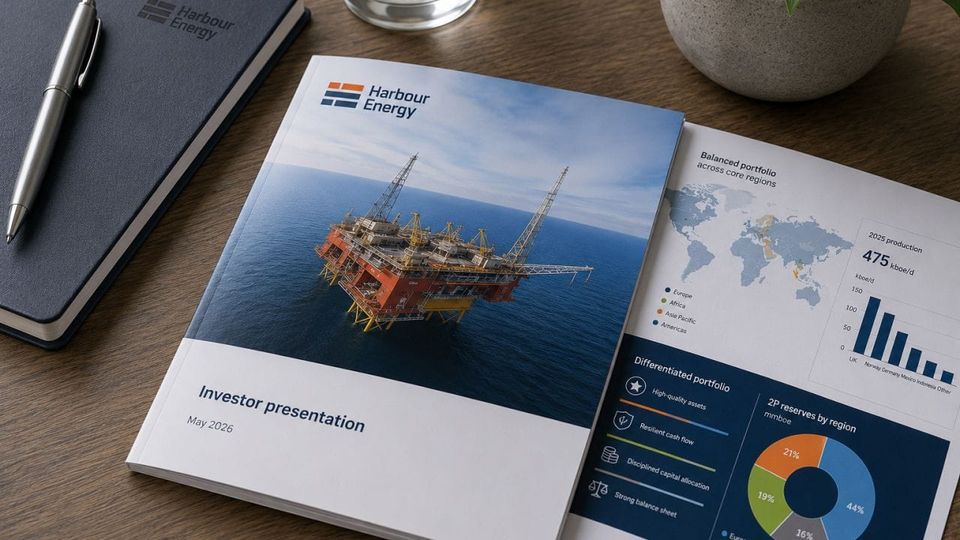
Why Malaysia Makes Sense for North Sea Operators

EnQuest announced today a major acquisition of Malaysian production assets. The enlarged group is expected to produce more than 100 kboepd, with Southeast Asia representing 69% of 2025 production on a pro forma basis. This is a hugely significant event for EnQuest. It has clearly taken years of work to get to this transaction, and the company deserves a great deal of credit for pulling it off. It is also important for the UK North Sea more generally. Malaysia has been a natural counterpart to t

Read article
30

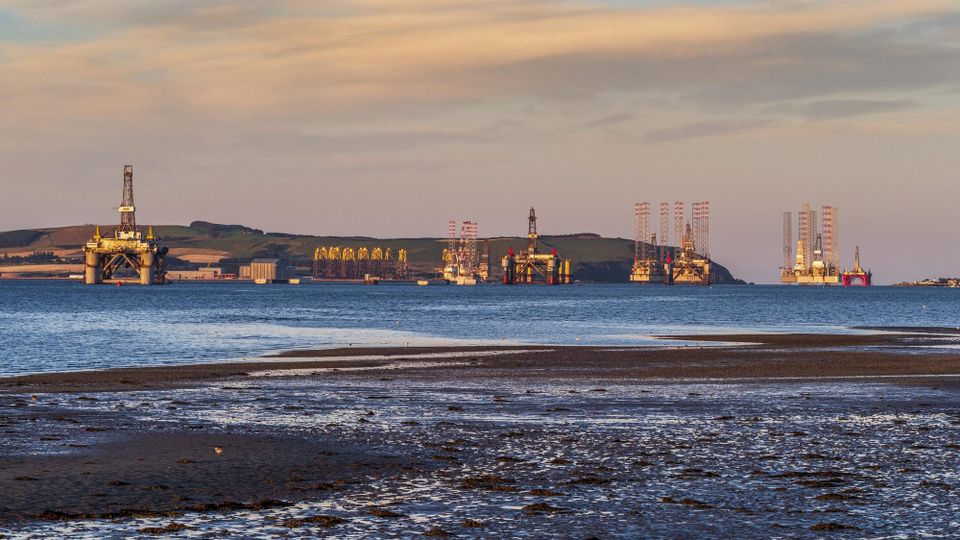
If BP Sells UK Upstream, Equity May Matter More Than Cash

The final phase of UK North Sea consolidation is surely approaching fast. BP has reportedly been reviewing its UK North Sea upstream business as part of a broader portfolio reset. BP’s UK upstream business is special because it is not just a run-off package. A large part of the UK North Sea’s remaining strategic value sits West of Shetland, and BP has dominated that region from the start. It is, by far, the least mature part of the UKCS and still has huge remaining potential, especially in the

Read article
31

The Evolving Investment Case for UK North Sea Mid-Caps

The UK North Sea is out of favour. Assets are being valued under a fiscal and political cloud. Sellers are under pressure, capital is scarce and public market valuations reflect little obvious upside. For companies with scale, liquidity, operating capability and shareholder return policies, that environment can be an opportunity rather than simply a problem. The best North Sea mid-caps are not just waiting for a better fiscal regime. They are trying to use the current trough to build larger, mo

Read article
32

Two Funds, One Oilfield: Hurricane Energy as a Case Study in Capital, Timing and Technical Risk

The rise and fall of Hurricane Energy offers one of the most revealing case studies in modern upstream oil & gas investing. At first glance, the company appears to represent a familiar narrative: a technically ambitious exploration company that attracted substantial investor enthusiasm before ultimately disappointing on reservoir performance. Viewed through the lens of fund management, however, Hurricane’s history reveals something far more sophisticated and instructive. Over nearly a decade as

Read article

Stay ahead of the signal

New analysis, delivered directly.

Subscribe for free